A VPN makes browsing the internet and web tasks completely anonymous so your IP address is not visible by anyone and all of your traffic is encrypted. OpenVPN is an open-source VPN solution that is widely used for privacy, remote access and securing network traffic.
OpenVPN is very fast and stable, and when connection problems appear it is very unlikely to drop connection, keeping your privacy and security intact. There are currently no known vulnerabilities which ensures your data is safe and protected.
OpenVPN is available on all major operating systems including Windows, macOS, Linux, Android and iOS. This guide is specifically for setting up OpenVPN GUI on Windows.
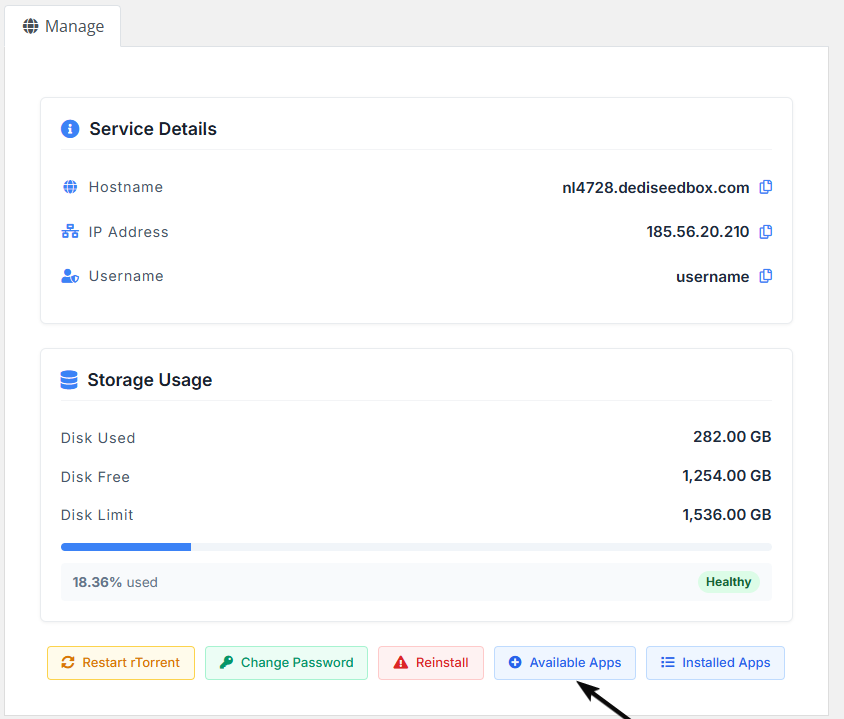
Log in to the client area and go to your service page. From the service page you can see your service details such as your hostname, IP address and storage usage. Click the Available Apps button at the bottom of the page.
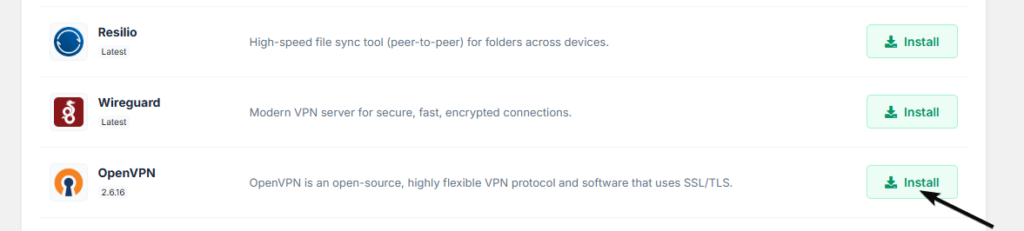
On the Available Applications page, scroll down to find OpenVPN in the list. Click the Install button on the right hand side to begin the installation.
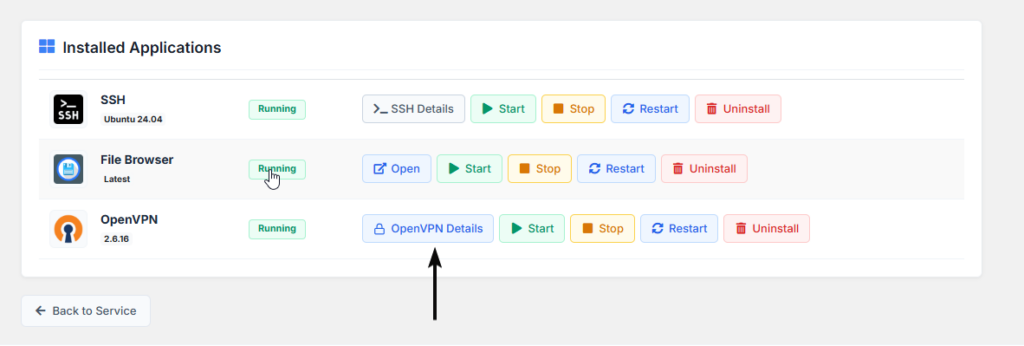
Once installed, click the Installed Apps button to go to the Installed Applications page. Locate OpenVPN in the list and click the OpenVPN Details button.
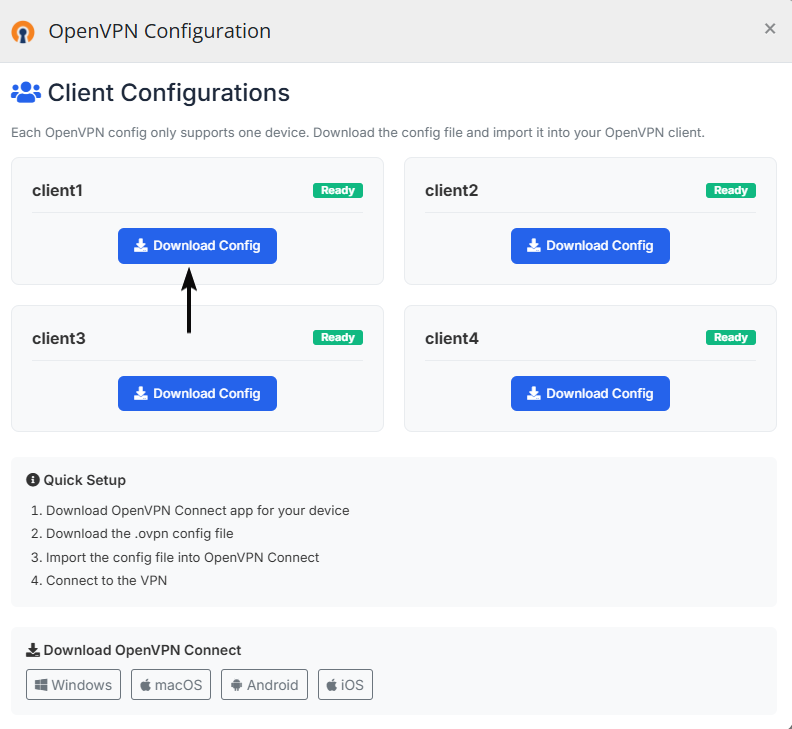
The OpenVPN Configuration page will open showing your available client configurations. Each config supports one device, so if you need to connect multiple devices you will need to download a separate config for each one. Click the Download Config button on any of the available clients.
Once downloaded, move the .ovpn configuration file to the OpenVPN config folder on your computer:
C:\Program Files\OpenVPN\configThe .ovpn file contains all of the connection settings so once it is placed in the config folder you are ready to connect.
Note: You may need to run File Explorer as Administrator to move files into the Program Files directory.
Config not appearing in OpenVPN Make sure the .ovpn file is placed directly inside the config folder and not in a subfolder.
Connection failing Make sure you downloaded the correct config and that it has not already been used on another device, as each config file only supports one device at a time.